Wednesday, 5 March 2014

Ultimatum: Production

Ultimatum: Production

Recently me and my group have been dedicating any free periods we have, lunchtimes and after school to filming various scenes of our Final Opening Title Sequence, my role in the sequence is both main Cameraman and Editor, so I film the clips then take them over to the editing software, Adobe Premiere Pro, and cut and piece them together. The following pictures were taken by our Director, Daniel Bruce, during a particular scene in the woods where two characters are chasing another character. The pictures are to highlight the progress we have made in the past few weeks. There are multiple shots of the scene in which we filmed in, and one particular shot of me up in tree where I had to film a high angle shot of the three characters in the scene running past.
The locations and shot angles are mentioned in previous blog posts and in the Shot List that I have also provided in another blog post. Because of this planning, it proves that my planning stage, as well as everyone else's, was very valuable to myself and the other members of in group. Daniel who created our groups shot list is one to credit as without him, we couldn't have been able to film well planned out and structured scenes in our Opening Sequence. Because we are making a thriller film, it only felt necessary that we should try and make the locations we used representative of the thriller genre, and I think we have done this Justice.

Independent Film vs Hollywood Film

Independent Film vs Hollywood Film

Independent Film:

An independent film is a film which is created without large media corporations becoming involved meaning things such as new innovative ideas and funding. A film cannot be classified as being an "Independent" film if it has had help from any outside large media corporations, it has to be solely funded, produced and distributed privately, perhaps through subsidiaries of major film studios. In today's film industry we do not see a lot of Independent Film's as movies nowadays are made from big Hollywood Production Companies. You can usually tell whether a film is Independent or not because you can distinguish them through their content and style and the way in which the filmmakers' personal artistic vision is put across to the audience.

More recently however the term "Independent Cinema" is referred to as more of a relative term and refers to a film which has very minuscule help from large media corporations, for example Warner Bros, 20th Century Fox and Paramount, than in a mainstream film.

Hollywood Film:


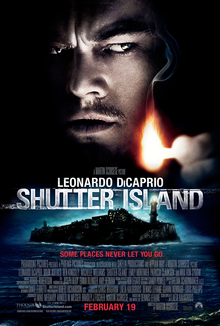
A big media corporation handles both the production and distribution for a Hollywood Film. They produce multiple films within a year and are major competitors in the box-office revenue market. In the movie history today the big Hollywood Productions are far more successful than Productions created else where, having big budgets and being able to handpick the most popular actors which help to make the movies these big Hollywood corporations produce become instant hits in cinemas. Money is key in the media industry, if a corporation has a lot of it then their options in terms of actors, props, locations and other key aspects are basically endless. A good example of this is Shutter Island. The Production Companies had a budget of $80 million, using this, the Producers had to create the illusion that the institution featured in the film was actually on an island separated from the outside world. So the money that went into locations, props and special effects must have been colossal. As you can see below a huge budget has been invested to provide a fitting film for audience entertainment.


Below is a table I created on Microsoft Word in image format, and it shows five well known Independent and Hollywood Films. As you can see the budgets definitely jump from an Independent Film to a Hollywood Film, with Reservoir Dogs having a budget of $1.2 Million and Fast Furious 6 having a budget of $160 Million - this is significantly higher and shows that without large media corporations a film is likely to have a very low budget. In term of the media industry $1.2 Million is a very low budget. As you can tell, whether a film is an Independent film or Hollywood film, this does not define whether the film will be of good quality or not, in fact, some Independent films are better than Hollywood film even though they had far less budget - it depends on how that budget is used.

Sunday, 2 March 2014

Three Act Structure

Three Act Structure

The author of Screenplay and The Screen Writer's Workbook, Syd Field, has outlined a certain paradigm that most the majority of screenplays follow. A paradigm is essentially an overall pattern created by a film that helps us categorise it. This particular paradigm is the structure that holds screenplays together. Syd Field said that screenplays follow a three-act structure. This means that the standard screenplay can be divided into three different parts, these being: Setup, Confrontation, and Resolution.

Act 1: 
This would be the act which usually lasts for the first quarter of the movie. If the movie is 2 hours long you'd expect Act 1 to take up 30 minutes of the film, however it varies from film to film depending on how long it is.


Dramatic Premise - The film is about Kale being under house arrest and discovers, after spying wit his friends, that his neighbour is a serial killer. But after the Police fail in discovering who his neighbour really is, Kale decides to take matters into his own hands with his friends.

Main Character - In the film, Disturbia, we are introduced to the main Protagonists within the first 30 minutes of the film. We are first introduced to arguably the "main" Protagonist, Kale, who is in a car crash and witnesses his Dad's death. Following this One Year Later we see Kale put under house arrest for hitting his school teacher.

We then are introduced to other character such as Ashley, Ronnie, and Julie (Kale's Mum). We see their relationships are how well they know each other, from here the audience have established who the Protagonists are.

Inciting Incident - This is when the plot of the film is set in motion. For example in the film Disturbia the inciting incident is when Shia LeBeouf's character realises that his next door neighbour is a cereal killer while spying on him, as seen in the mobie poster, and this sets the plot up for the rest of the film.

Act 2:
Act two will normally last about two quarters of the film so if the film is about 2 hours then the second act will be around an hour.

Obstacles - Within Disturbia the first obstacle is that the main character is kept under house arrest and cannot go out of his house within a certain distance otherwise the Police will come, this isn't ideal for him as he cannot leave his house at all. The next obstacle would be when he first realizes his next door neighbor is serial killer, but cannot do anything due to the first obstacle, being under house arrest, and the fact no one would believe him.

First Culmination - This is the part in the film where the main character Kale (Shia LeBeouf) is close to achieving the final end goal but then something happens which will then prevent him from doing so. The first culmination is when Kale gets video evidence of his neighbor being a serial killer, but the serial killer anticipates this and attacks the house Kale lives in.

Midpoint - At some point in the film there is a point where the Protagonist looks as if he will achieve his goal, however this is the part of the film in which something happens to the Protagonist meaning he looks weak and there's the possibility of the Antagonist winning. This is the part in Disturbia when the serial killer attacks Kale's house and starts throwing him and almost killing him at some points. This makes Kale appear weak as at one point you think Kale is about to be killed.


Act 3:
This is the part at the end of the film where the Protagonist eventually and finally achieves his goal. There are only two parts to this section.

Climax - This is the part in which Kale has to go to the serial killers house to try and find his Mum, after the serial killer has taken her. This builds up a lot of tension as there are a lot of points where you think the serial killer neighbor could jump out any minute.

Denouement - This is when the film has reached its end and the Protagonist overcomes the Antagonist even though the odds were stacked up against him. The part in Disturbia when Kale finds his Mum and kills the serial killer with a pair of shears after he is attacked while helping his Mum.

Kyle Cooper: Opening Title Sequences

Kyle Cooper: Opening Title Sequences

Watching the three videos seen below where Kyle Cooper is explaining what he knows about making the Opening Title Sequence has shown me specifically in detail what is needed in order to captivate your target audience. Kyle adds emphasis on the fact that the opening sequence is key for setting a tone for what is going to happen within a film. The audience is at the cinema watching your film for a reason, so it is basically your job to make the audience stay there and at that current point in time, their only concern is the movie their watching. Hearing it from Kyle Cooper, an acclaimed designer of film title sequences who has created title sequences for Dawn of the Dead, The Walking Dead and The Incredible Hulk, has helped me to grasp the fact that there are lots of aspects and components which go in to making Opening Title Sequences and that even the most elementary of things such as text can change the whole tone of the film before it has even properly begun.

The videos have also made me appreciate the amount of effort, research and planning people involved in the film put in to making just the Opening Title Sequences. The themes shown during the Opening Sequence have to be seen within the movie itself, on the other hand, this is not particularly a big concern to us as we are not making a full length movie which is likely to go out to a mass audience across multiple countries. Kyle Cooper also mentions that he likes using handmade things within an Opening Sequence, such as broken glass rather than animated special effects. This inspires me, because it proves that not every Opening Title Sequence has to be laced with special effects which is a very good beneficial thing to us, as we would most likely not be able to use special effects anyway.


Feedback from Teacher

Feedback from Teacher


Above is a screenshot of some feedback I received from my teacher. As you can see my teacher gives me an idea of what my current grade is in my blog at the moment and then she gives me specific areas I need to improve on or add to in order to achieve my full potential in those particular blog posts. After reading this comment, I immediately went to correct any mistakes I had made and also add in more information on parts which lacked it. 


As seen in the picture above, she followed this particular comment with possible posts I might have missed out on which I may want to rectify in order to focus solely on my Opening Sequence. I went through each post checking to see if I had missed any out, which I actually had done. Therefore, so that I could focus on my Opening Sequence I went and immediately added in the posts which I didn't have.

Again, looking at the above picture my teacher has identified a problem with one of my blog posts. I have embedded two clips into my post but I have not mentioned how they will help shape and influence my Opening Sequence, like the other feedback I had received I quickly went to rectify that mistake. Secondly my teacher pointed out that I was barely using other media technologies, and at this point I didn't realise that this was needed, so in the majority of my future posts I started using media technologies such as SlideShare, Prezi, SoundCloud and a few more.

For me, teacher feedback is a very important part of learning, and especially when it comes to work such as this as it helps me identify areas I may need improving on, because I may look at something and think it is fine but if my teacher was to look at it, they may see something which is missing or doesn't particularly fit, and therefore I can go back and improve on my mistakes, and I think this really helps me progress.

Storyboard of Our Preliminary Task

Storyboard of Our Preliminary Task

Below is the story board which was created before the actual filming of our Preliminary Task. It consisted of all our groups ideas and also included a brief description under each picture of what that scene would consist of. First of all there was the scene in the car between me and James which essentially was us being told to come back to the Police Station; both of us were acting as Police Officers. The next scene was a small clip of me and James walking through the corridor's of what was meant to be the Police Station, following this was another scene of us entering the door into the Interrogation Room. The next scene was again of me and James coming in through the door, leading onto a shot which includes Jack, the criminal in our Preliminary Task. From here, Shot-Reverse-Shot was used to bring across both Jacks and James' expressions as they both engaged in an argument. That is the simple form of what we created and noted down on the story board, but obviously the more complex and actual version of the Preliminary Task is seen in the video on the other blog post.


Saturday, 1 March 2014

Lighting on the Ultimatum Set

Lighting on the Ultimatum Set

As the main editor of our Final Opening Sequence, Ultimatum, I wanted to make sure the film itself looked as professional as possible when the clips were finally given to me to edit in Adobe Premier Pro. Through using top of the range lights which were provided to us by our Media Teacher I feel that it has really made a difference to the scenes which require the lights (e.g. my phone call scene). James, Jack and Daniel both arranged our lights in positions that would make myself, actor in the chair, appear barely visible to the audience as my character is the villain who does not get revealed until the very last scenes of the Opening Sequence. Being able to manipulate the position and strength of the lights (the switch is seen in the picture below) would allow the audience to only see a slight silhouette of myself and barely be able to see any of my facial features. Because of the lights being dark as they were the audience should identify from here that I am an unknown villain which they are most likely going to see more of later on in the film.

Below are a few pictures taken by Daniel Bruce, Our Director, when we were on set showing the lights in action and how we set them up...


These particular scenes did not take long to film however it was able to give us a good result in the little time we used the lights for. Personally, I feel that using lighting, such as the ones below, can change the way a film or a particular scene is portrayed; It can change the overall tone of the scene, and add different effects, such as a dark setting adds eeriness and mystery, while a very bright lighted setting would most likely add happiness and joy. As the editor of our group, you want to see Lighting being used so that it makes your job easier, as you don't have to add a Brightness/Contrast Effect as shots look much better and professional when an effect like that isn't applied to them. The lights we were able to use on this particular of filming very much aided us in achieving yet another great scene for our film and it has also given us new skills we can now utilize in the future.