Synergy
Thursday, 24 October 2013

Monday, 21 October 2013
Media Institutions
Media Institutions
Media Studies has a lot of fairly difficult 'Key Concepts', one of these particular concepts is ‘Media
Institutions’.
It can help to think about what it
means when a concentration of media
companies, those that can manufacture high quality media texts and
products and distribute them widely and easily, lies in just a few hands. These companies are called
‘media institutions’.
An institution is something that plays a major role in people’s lives in society. This could include, family, NHS, and the School; these
are all considered ‘institutions’. The media plays a big part these
days in basically everyone's lives.
There is however a key difference between family, the health service, school, and media companies. The first three are there to 'serve' us; the last works to serve its shareholders.
It’s a fact that most of the media is
owned by just a handful of companies
and individuals. E.g. In the USA, there are five large corporations or 'institutions' that control nearly all the ‘visual media’ seen by the American public, such
as television, films, etc.
An example of someone who owns such an Institution is Rupert
Murdoch. Rupert is the CEO of the News Corporation; the News Corporation owns a series of Newspapers as well as a selection of other companies.

Concentration of Media:
Some critics argue that a having one individual/corporation have control over a wide range of media offers that individual/corporation a huge level of influence
and power to whoever views their media. Concentration of ownership in itself can act like a media ‘gatekeeper’.
Media
texts are entertaining, and to some people, very persuasive. The question is,
are they persuading us to believe that what they are telling us is the truth?
If one person owns a great deal of the
media, that person then has the power to limit points of views which the media shows to the public to those that are
sympathetic towards certain stories/values which are seen in the media; these values are prone to fit into the ‘way things are’.
Production Expense:
To create the kind of 'high quality' media that we know, a great deal of money is
required. And it’s in the media’s interests to keep it that way, so we continue viewing that particular media text. They employ the best people and the
best equipment to create the highest quality media texts.

Advertising:
A lot of media companies rely on selling advertising space to cover the high costs which goes into distribution
and production. If a magazine loses its major
advertisers, it goes out of business. This is because magazines/newspapers use advertising to make their money as the newspaper don't particularly cost a lot, they need to make money from some where else.
Thursday, 17 October 2013
Monday, 14 October 2013
Film Rating
Film Rating
All classification decisions are based on the4 BBFS's published regularly updated Guidelines. The Guidelines are the product of extensive public consultation, research and the accumulated experience of the BBFC over many years. They reflect current views on film, DVD and video game regulation.
- Ratings changing e.g. Blade Runner --> Directors Cut has a different rating to the main/final film.
- Rambo was also another film which did this.
- In the 1960s, the studio system began to fail, this was because movies were released with progressively more bold content. The decision was then made to implement a new ratings system. This informed viewers of what they would see and what to expect.
Different Types of Film Ratings:
 U - This was the first official BBFC rating, it stands for Universal and states that the film is suitable for everyone.
- PG - This was the second BBFC rating, and it stands for Parental Guidance. This is technically the same as the U rating, however they must be with an adult. A parent/guardian should consider whether they'd want their child to be watching the film unaccompanied.
- The third BBFC rating is 12A, those under the age of 12 are only allowed to see 12A rated filmed if they are accompanied by an adult.
- Next is just a 12, simply you need to be 12 or over to view 12 rated films. This is because it may include swearing, violence, etc.
- Fifth is the 15 rating this is the same concept as 12, you have to be 15 or over to view 15 rated films
- The sixth film rating is 18, these are usually very violent films, and could contain sex references or very strong language.
- Lastly is R18, which stands for Restricted 18. These films can only be shown at licensed cinemas or 'sex' shops. The content in this film are considered to extreme for 18 and has very strong violence and sexual activity.
Below is a picture from a website called Common Sense, it lets you know ratings of films and gives a parents point of view, for other curious parents..

Thursday, 10 October 2013
Representation of Men in the Genre of Thriller
Representation of Men in the Genre of Thriller
When it comes to the Thriller Genre, the way gender is represented is stereotypical; for example in the majority of thriller films the male is depicted as the hero/protagonist, and the antagonist is often male also; whilst the female on the other hand is usually the victim or is someone in need of help, the damsel in distress (typical stereotype). In addition females are often represented as the hero's side kick, and are considered sex symbols/source of sexual attraction for the male Protagonist or Antagonist.
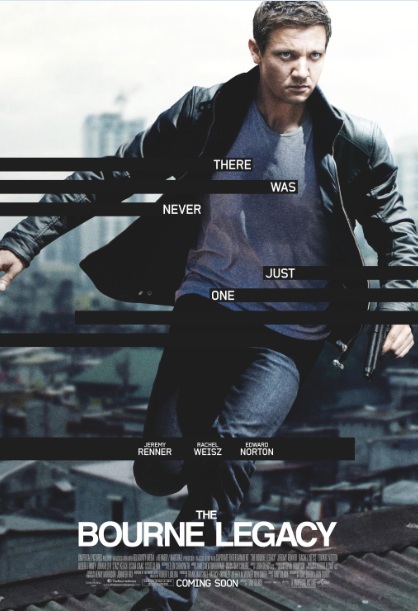
The Bourne Legacy Trailer:
Male Protagonists are often stereotypically seen as the “lone hero”, and have a lot of independence. This is also true of Male Antagonists; they are often portrayed as isolated, a bit lonely, but have power. Males often restore the new equilibrium at the end of the film.
 Another Thriller film which portrays men in this sort of way is Die Hard. John McClane (Bruce Willis) is an officer on the NYPD and after his wife and others are taken hostage at the Nakatomi Plaza, John attempts to save them.
In the Die Hard trailer below, we see Bruce Willis being the strong Protagonist attempting to save his wife who, fitting with the conventions of thriller, is the Damsel. Bruce Willis' character stays true to the typical representation of men in the thriller genre, as does the male Antagonist, he seems to be powerful as he has taken over the whole of the building. We also see Bruce Willis hurling himself down elevator shafts and running from explosions, which show he is both physically and mentally strong, as he is taking on what appears to be a squad of dangerous men.
Die Hard Trailer:
Monday, 7 October 2013
Audience Research
Audience Research
Demographic - The audience's..
- Age
- Race
- Gender
- Class/Status
- Nationality
Psychographic - The audience's..
- Interests
- Beliefs
- Hobbies
Audience Research - Audience research is a major part of any media company's work. The media companies usually use questionnaires, focus groups, pre-film screening and also spend a lot of time and money finding out who would be interested in their particularly product.
Audience Profiles - This link, on Thinkbox, has helped me understand how audiences are characterised into profiles.
Group A:
- Lawyers
- Doctors
- Scientists
- Well Paid Professionals
Group B:
- Teacher
- Middle Management
- Fairly well paid professionals
- Junior Management
- Bank Clerks
- Nurses
- 'White Collar' Professionals
- Electricians
- Plumbers
- Carpenters
- 'Blue Collar' Professionals (People who get there hands dirty, e.g. Builders)
- Drivers
- Post Sorters
- Students
- Unemployed
- Pensioners
How do we measure media audiences?
- Sales
- Subscriptions
- Ratings
- Figures
These are a few of the organisations who monitor audience sizes..
- NRS - This organisation conducts a continuous survey every month for 7 days a week. They interview 36,000 people a year, which is considered a 'large' sample. They also do random samples where they interview at randomly selected addresses with randomly selected individuals. The average interview takes 27 minutes.
- ABC
- BARB
- Bookseller

There are a few 'new' ways in which we can measure audience..
- Facebook/Other social network sites
- Online Forums - Comments tools
- Views on YouTube and Google +1
- Twitter Trends
When looking at audiences, there are two main types of research..
Quantitative Research - e.g. questionnaires
- Number Based
- Closed questions to generate exact answers
- Very Factual
- Analysis of existing products
- Open questions to generate answers open to interpretation
- Individual Preferences
Audience Engagement - This describes how a particular audience interacts with a certain media text. Different people can react in different ways to the exact same text.
Audience Expectations - These are the ideas the audience have before seeing a media text. This usually applies to genre pieces. Producers continually play with/shatter audience expectations.
Thursday, 3 October 2013
Audiences

Audiences
Niche: Audience for a specific set of people, not everyone will watch that particular film - A niche audience is a much small audience, however more influential. Basically, this particular audience is a group of people with a unique interest, which others wouldn't be interested in.
 Mass: A mass audience is aimed at everyone, where a niche audience is for only a specific set of people, a mass audience is named at everyone - Often termed 'Broadcast Audience'. A mass audience consume mainstream/popular texts, this can be done through soaps and sitcoms. Essentially it is media and communication that targets a very large group of people, of any gender/age/race etc.
What is an Audience?:
- An audience is an individual/collective group of people who read, consume or watch any form of media.
- All pieces of media are made with a particular audience in mind. When a media text is being planned, one of the most important questions the producers have to consider is 'Does it have an audience?'
Why are Audiences Important?:
- Without any audience there wouldn't be any media.
- Media organizations that produce forms of media to make profit, will have no audience and therefore will make no profit.
- The mass media is becoming more competitive in a variety of ways, this is to attract more audiences, doing this means they can stay profitable.
Uses and Gratifications:
- The belief that audiences passively receive messages is gone. Katz and Blumler proposed, from the research they had collected that talked about audience behaviour, that audiences use media texts for a variety of different reasons.
Information - Finding out about events, satisfying the audiences' curiosity, which gives them a sense of security through knowledge.
E.g. Newspapers/Gossip magazines to learn about current events.
Person Identity - Reinforcement for personal values, finding models of behaviour insight into one's self.
E.g. Twitter and Facebook, you only add/follow people who you are interested in or want to interact with.
 Integration and Social Interaction - Insight into circumstances of others; social empathy, identifying with others and gaining a sense of belonging, interaction, enabling one to connect with family, friends and society.
E.g. Soap Operas & Sitcoms - might tune into a programme like Scrubs to catch up with the characters.
Impact of New Technology on Audiences:
- Old Media, e.g. TV, Print, Radio, which used to have a big amount of audience numbers must now work harder to maintain these audience members.
- Digital Technology has also led to an rising uncertainty over how we define an audience. The general agreement that a large group of people who are reading the same thing at the same time is outdated, and that audiences are now 'fragmented'.
Subscribe to:
Posts (Atom)